Termites in Maribyrnong: What Homebuyers Should Check
Termites in Maribyrnong: what homebuyers should check. Learn what a building inspection misses and which checks to demand before you sign a sale contract.
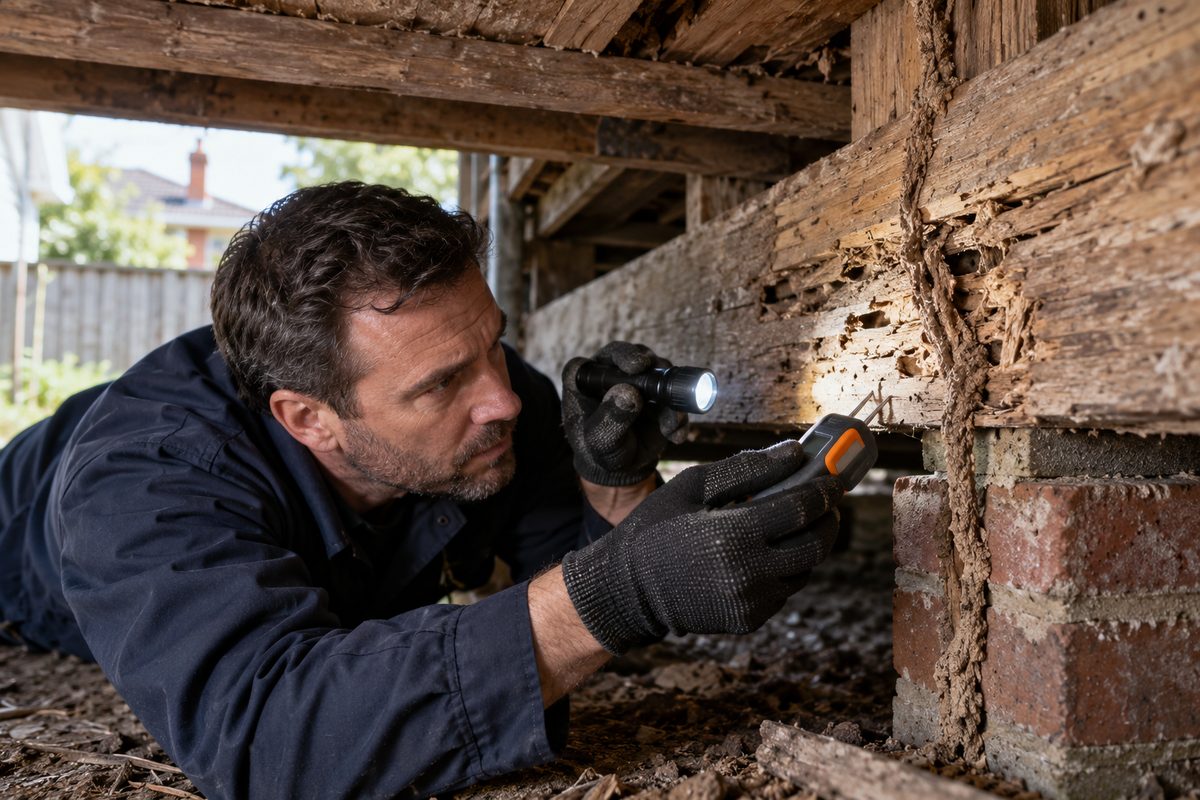
Before you buy in Maribyrnong, order a combined building and timber pest inspection, ask for the full termite history of the house, and check the soil, drainage and timber around the building yourself. Termites are active across Melbourne's inner west. Older homes near water carry the most risk. A clean report on one day does not guarantee a clean house, so you need to know what the inspector can and cannot see.
I have walked through many homes with buyers in this part of Maribyrnong, Victoria. The same pattern shows up again and again. Buyers fall in love with the kitchen and the street. They skim the pest section of the report. Then they find out later what a hollow skirting board really means. This guide fixes that.
Why is termite risk higher in this suburb?
Termites need three things: food, moisture and shelter. This suburb supplies all of them. Many houses are old and timber-framed. The ground is often damp. Mature trees sit close to the walls.
The Maribyrnong River shapes much of the local ground. Low, flat land near the river holds water longer after rain. Streets close to the creeks and the wider Maribyrnong waterways tend to have higher water tables in wet years. Damp ground draws foraging termites toward a house, because the colony needs moisture to survive.
Two species matter most in Victoria. Coptotermes acinaciformis is the most destructive termite in Australia. It can build a large colony in a tree or in the ground and strip a frame fast. Coptotermes frenchi is also found in Victoria and causes serious damage too. You do not need to tell them apart. A pest inspector or entomologist can identify the species. What you need to know is that both work out of sight, often for months, before a homeowner notices anything.
In my experience, buyers assume termites are a problem for the country or the tropics. One of my clients thought the same. She bought a tidy brick house near the river and found live workings in a door frame within her first year. The brick was fine. The frame behind it was not.
Which homes are most exposed?
Age matters, but construction details matter more.
Homes from the Edwardian era and earlier often sit on timber stumps with a sub-floor void. That void is a highway for termites if it is damp or poorly ventilated. Many of these houses have also been renovated more than once. Each renovation can bury an old problem under new plasterboard.
The classic Victorian architecture in the area brings its own risks. Timber verandahs, fretwork, timber window frames and old weatherboards give termites plenty to eat. Brick veneer homes from later decades hide timber frames behind a masonry skin. A termite can travel up a cavity behind brick without leaving a mark on the outside.
Newer townhouses and apartments are not immune. Concrete slabs reduce risk, but they crack. Plumbing penetrations and slab edges leave gaps. Garden beds and paving that bridge the slab edge cover the one place an inspector needs to see.
The honest answer: any house with timber in it is at risk. Your job is to find out how well that risk has been managed.
What does a building inspection actually cover?
A standard building inspection looks at structure, roof, drainage, cracks and general condition. It is not a termite inspection. Many buyers believe it is.
A timber pest inspection is a separate service. In Australia it follows a published standard, which sets out what the inspector must check and what they may leave out. Book both together. Most companies offer a combined report, and it saves money.
The report will usually list areas that could not be inspected. Read that list first. Fixed furniture, stored boxes, insulation, locked rooms and tight roof spaces all limit access. Every blocked area is a place where termites could be active and unseen.
I know this because a client of mine once skipped that list. The report said the sub-floor was inaccessible. She bought anyway. When the floor came up for a bathroom renovation, the bearers were hollow. The inspector had done nothing wrong. The report had warned her. She did not read the warning.
What I found was that a cheap report with a long limitations section is worth less than a pricier report where the inspector actually got into the void. Ask the inspector to tell you before the day what access they need. Then ask the agent to arrange it. You can also ask the vendor to clear storage from the garage and sub-floor access hatch before the inspection.
What can you check yourself at an open home?
You do not need training to spot warning signs. You need ten calm minutes and a torch.
Look for these signs inside the house:
- Mud tubes on walls, stumps, or inside cupboards. These thin tunnels are about the width of a pencil.
- Timber that sounds hollow when you tap it with a knuckle, especially skirting boards and door frames.
- Bubbling, rippled or sagging paint and plaster, which can mean something is eating the material behind it.
- Doors and windows that stick for no clear reason.
- Fine, sand-like droppings or discarded wings near windowsills and light fittings.
Then walk the outside. Look for these things:
- Timber fences, sleepers or garden edging touching the house or slab.
- Soil or mulch piled above the damp-proof course, which is the line of material that stops moisture rising up the wall.
- Stacked firewood, old stumps or dead tree roots near the building.
- Downpipes and taps that leak into the ground beside the wall.
When I did this walk with one buyer, we found a leaking garden tap right beside a weatherboard wall. The timber beneath it was soft. She negotiated a repair credit before settlement. A ten-minute walk saved her money.
How do water and ground conditions raise the risk?
Termites follow moisture. Fix the water and you remove half the problem.
Check soil moisture around the home. If the ground beside the house stays wet days after rain, ask why. Poor drainage, blocked agricultural pipes, sloping yards that feed water toward the walls and leaking stormwater pipes all keep soil damp. A damp base also encourages timber decay, which makes the wood easier for termites to eat.
A good inspector will bring a moisture meter. This tool reads the water content of timber and wall linings without damaging them. High readings in a wall do not prove termites. They do prove that something is wet, and wet is where termites like to be. Ask the inspector to record the readings and show you where they took them. Vague notes such as 'some moisture noted' are not good enough.
A retaining wall deserves special attention on sloping blocks. Timber sleeper retaining walls are common in older gardens. They rot, and they trap water against the soil. If a timber retaining wall sits close to the house, termites have a ready-made path from the ground to the walls. Concrete or masonry walls are better, but check that the drainage behind them works. A wall with blocked weep holes can push water toward the foundation.
Ask the agent how the block behaves in heavy rain. Neighbours often tell you more than the sales brochure does.
Does a termite barrier make a house safe?
No. A barrier lowers risk. It does not remove it.
Two kinds of barrier are common. Chemical barriers are applied to the soil around the building. Physical barriers use materials that termites cannot chew through. Stainless steel mesh is the best-known example. It is installed during construction or retrofitted under certain conditions, and it forces termites out into the open, where an inspector can see their tunnels.
Ask for the paperwork on any barrier. You want to know the following:
- What type of system was installed.
- The date of installation.
- Whether it covers the whole building or only part of it.
- Whether the owner kept up the annual inspections that the system requires.
That last point trips up many buyers. A chemical barrier loses strength over time. Disturbance by landscaping, new paving or a new deck can break the treated zone. The warranty on a barrier usually depends on regular inspections. If the owner skipped them, the warranty may be void. Ask for the warranty document and read the conditions. Check whether it transfers to a new owner. Many do not transfer automatically, and some need a fee or a fresh inspection first.
I once saw a buyer pay extra for a house because the agent mentioned a termite system. The system was fifteen years old, and the last inspection was nine years back. The warranty meant nothing. He found out only because he asked to see it.
What should you ask the seller or agent?
Sellers in Victoria must disclose certain matters in the vendor statement, but termite history is not always spelled out clearly. Ask direct questions and ask for answers in writing.
- Has the home ever had termite activity, and when?
- What treatment was done, and who did it?
- Are there reports or invoices on file?
- Has any timber been replaced? If so, where, and was it done with a permit where required?
- When was the last timber pest inspection?
Past activity is not an automatic reason to walk away. A house that had a problem, was treated properly and has been inspected every year since can be safer than a house with no history and no checks. The danger is a house with unexplained repairs and no paperwork.
Look hard at fresh paint or new lining in one spot. Sellers often repair and repaint before sale. A new patch of plasterboard under a window or beside a bathroom is worth a question.
When should you walk away or negotiate?
Give yourself clear rules before you see the report. That keeps emotion out of the decision.
Walk away when the damage reaches structural timber, such as bearers, joists, wall frames or roof trusses, and the seller refuses to price the repair. Walk away if the inspector could not access large areas and the seller will not allow further access.
Negotiate when the activity is limited, treatment is available and the repair cost is clear. Get a written quote from a licensed builder and a licensed pest controller. Take those quotes to the agent. They give you a number to talk about, which is stronger than a feeling.
Time matters too. In Victoria, the cooling-off period for private sales is short, and it does not apply at auction. If you plan to bid at auction, do your inspections before the day, because you cannot get out afterwards. I tell every buyer I work with the same thing: the report is cheaper than the regret.
What happens after you buy?
Buying is the start of the work, not the end.
Book a timber pest inspection every year. Many experts suggest an annual schedule, and some barrier warranties require it. Keep every report in one folder. When you sell, that folder becomes proof that you looked after the house.
Keep soil and mulch below the damp-proof course. Fix leaks quickly. Move timber stacks away from the walls. Cut back garden beds that touch the slab. Do not let a new deck or pergola cover the inspection zone around the foundations.
One of my clients put a beautiful timber deck against her house and never thought about it again. Three years later, the inspector could not see the slab edge. The deck had to be partly lifted for the check. A small design change at the start would have saved her the cost.
Your next steps
Do these things in order before you sign anything:
- Book a combined building and timber pest inspection with an independent company, not one the agent chose for you.
- Ask the vendor to clear access to the sub-floor, roof space and slab edges before the inspector arrives.
- Read the limitations section of the report first, and ask for a follow-up visit if key areas were blocked.
- Request the termite history, barrier details and warranty documents in writing.
- Walk the outside yourself, checking drainage, soil levels, timber retaining walls and leaking taps.
- Get repair quotes for any finding, then use them to negotiate or to decide whether to walk.
If you take one action, make it this one: do not buy a house in Maribyrnong until a qualified inspector has been under the floor and in the roof, and you have read what they could not reach.