Living in Edgewater, Maribyrnong: Streets, Amenities and Riverside Access
Living in Edgewater, Maribyrnong means a planned riverside estate with flat streets, trail access and quick city links. See the streets, amenities and trade-offs.
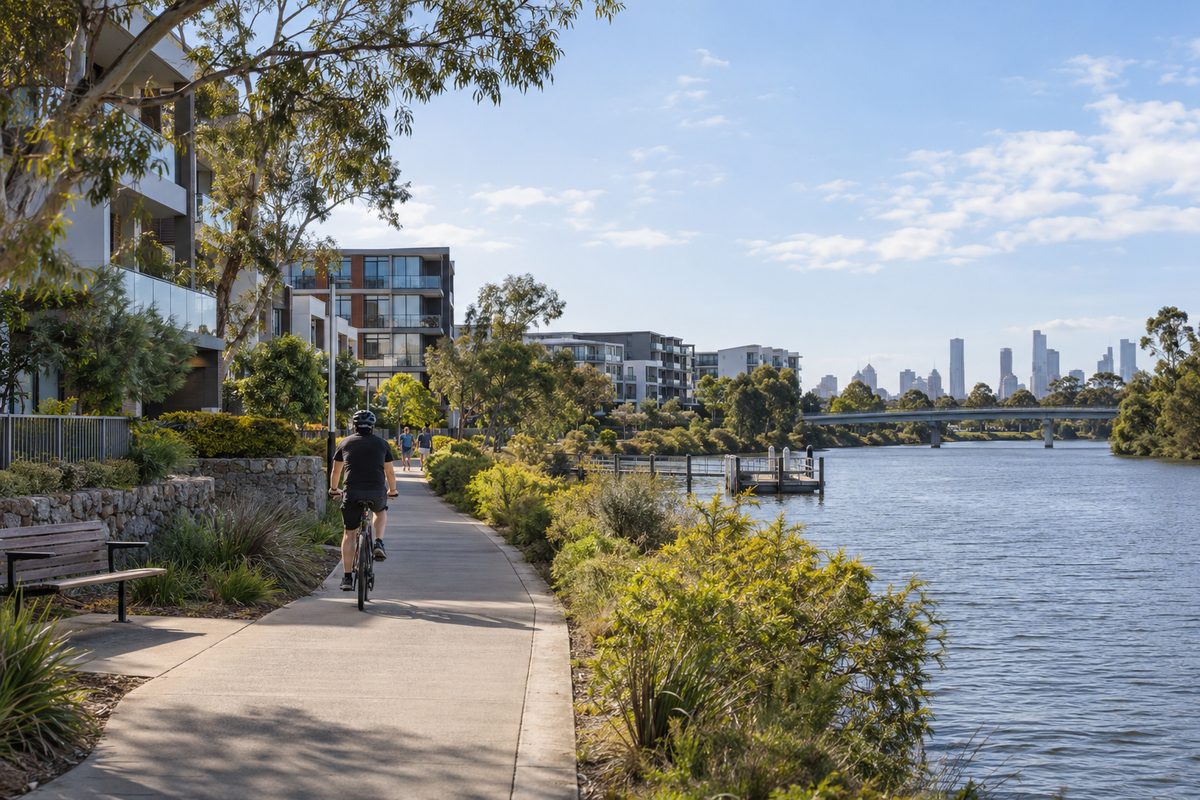
Edgewater is a planned riverside estate in Maribyrnong where the daily draw is flat, walkable streets, a trail at your door and a short trip to the city. It suits people who want river views and easy exercise without paying inner-north prices. It suits them less if they need a train station next door or a quiet, old-style street.
This guide covers the estate itself: how the streets work, what you can walk to, and how the river shapes an ordinary week. For prices and history, see our separate articles on housing costs and on how Maribyrnong grew from industry to riverside neighbourhoods.
What is Edgewater, and where does it sit?
Edgewater is a master-planned estate built on former industrial land beside the Maribyrnong River. It lies in Maribyrnong, Victoria, about eight kilometres north-west of the city, inside the City of Maribyrnong council area.
One quick warning. Search for the name alone and you may land on Edgewater, Chicago, a lakeside neighbourhood on the other side of the world. Add the suburb name to every search, or you will waste time on the wrong place.
Because the estate was planned from scratch, it feels different from the older streets around it. Blocks are regular. Roads are wide. Parks are placed on purpose, not squeezed into leftover corners. That is the first thing most visitors notice.
What are the streets like day to day?
The streets are flat, tidy and easy to read. A spine road runs through the estate, with smaller streets and courts branching off it. Footpaths are wide and mostly continuous, so pushing a pram or walking a dog needs no planning.
Traffic is calm inside the estate. Most cars belong to residents, so you rarely get through traffic cutting across. The busier edge is the link out to Maribyrnong Road, which carries commuters and trucks. Expect noise near that boundary and quiet further in.
In my experience, people who walk the estate at 8am and again at 6pm learn more than any inspection teaches them. One of my clients almost bought on a corner close to the main road. She came back on a weekday evening, heard the queue of cars, and chose a street two blocks deeper in. She told me later it was the best ten minutes she spent in the whole search.
Which part of the estate gets the best outlook?
Homes and apartments closest to the water get the views, and they price accordingly. Edgewater Towers is the best known example, a high-rise block that gives many apartments a long look across the river. Lower floors still gain from the greenery. Higher floors catch the sunsets and the open sky.
Streets one or two rows back give up the view but often keep the trail within a three-minute walk. For many buyers that is the better deal.
How much does riverside access really change your week?
It changes more than you expect. The Maribyrnong River is not a postcard you drive past. It is a place you use before work, after dinner and on weekends.
The Maribyrnong River Trail runs along the water here. It is sealed, wide and mostly flat. Walkers, runners, cyclists and people with prams all share it without much fuss. Head one way and you reach quiet reserves and open stretches. Head the other way and you move toward the inner suburbs.
The trail also links into the Capital City Trail, a loop that circles the inner city. That matters if you cycle. You can ride a long, mostly traffic-free circuit without learning a single busy intersection.
When we looked at this for a couple who had just moved in, the change was clear. They had been sedentary in a flatter, inland suburb. Within a month they were walking the river every second evening. Nobody told them to. The path was simply there, so it happened.
Who looks after the river and its banks?
Melbourne Water manages the river and much of the waterway corridor, while the local council handles the parks and paths around it. This matters for two reasons. First, it explains why bank works and planting happen in stages. Second, it tells you who to contact about flooding questions and drainage. Before you buy near the water, check the flood overlay on the council planning map. Do not guess.
Is the cycling and walking network good enough to skip the car?
For short trips, yes. For every trip, probably not.
The estate gains from solid cycling infrastructure: off-road trails, marked links and a network that connects to wider routes. Short rides to Footscray or toward the inner suburbs are pleasant and flat. A rider who commutes to the city can often travel along the river corridor for much of the way.
Walking works well inside the estate and along the water. It works less well when you cross the busy roads at the edge. Learn which crossings are safest before you let children walk alone.
What I found was that households with one car instead of two were common here, and happy. Households with no car were rarer. The shops and services you need weekly sit a short drive or a longer ride away, not a short stroll.
What amenities can you reach without a long trip?
Edgewater has parks, play spaces, open lawn and the river path. Cafes and small services appear near the estate's centre, with more choice a short trip away.
For a full grocery shop, most residents head to a nearby Shopping center. Footscray is the closest bigger hub, with markets, restaurants and a wider mix of fresh food. Yarraville and Seddon add village-style strips with independent cafes and bookshops.
For health care, gyms and larger chain stores, plan on a short drive. That is normal for a planned estate on former industrial land. It is not a flaw. It simply means you should price the car trips into your week.
What about schools?
Check your zone before you commit to anything. Victorian government schools take students by address, and the boundary can shift. Searching the area may bring up Edgewater Primary School as a name, so confirm on the official Victorian school zone finder whether that school or another one serves the exact address you want. Never rely on an agent's word or a listing description.
Families should also ask about enrolment capacity. A zoned school can still be full. One client I worked with found this out after signing a lease. She had to move again within the year. A ten-minute check up front would have avoided it.
How do you get to work and to the city?
The Melbourne central business district is close in distance and a little slower than the map suggests. Driving depends heavily on the hour, since Maribyrnong Road and the western approaches clog at peak times. Cycling along the river is steady and predictable.
Public transport is the weak point, and you should know that before you buy. Edgewater is not beside a train station. Most residents use buses or head to Footscray station for the wider network, or ride or drive to a station and park.
Many people also look east toward Essendon, Victoria, where the Craigieburn line runs. Essendon is reachable by car or bike in a short trip, but it is still a trip. Treat any station as a connection you have to plan, not a door you step through.
My advice: do the commute once before you commit. Do it on a Tuesday at 8am, not a Sunday at noon. The honest answer shows up fast.
What do residents like, and what do they put up with?
The likes are consistent. People talk about the river, the flat paths, the wide skies and the sense of order. They like that the estate is newer, so there is less maintenance on homes and fewer surprises in the streets.
The frustrations are consistent too. Edge traffic and noise are the first. The second is distance from a train line. The third is that newer estates can feel quiet on weekday mornings, with fewer old shopfronts and less street life than the long-established suburbs nearby.
Apartment buyers add one more: body corporate fees and building rules. Read the fee history and the sinking fund report before you sign. A great view means little if the levy jumps next year.
Who is Edgewater best for?
It fits four kinds of household well:
- Runners, walkers and riders who want a trail at the front door.
- Young families who want parks, wide footpaths and calm internal streets.
- Downsizers who want a low-maintenance home with a water outlook.
- City workers who cycle or drive and can live without a station at the end of the street.
It fits less well for anyone who needs to walk to a train every day, or who wants the character of old workers' cottages and corner pubs.
How should you test Edgewater before you commit?
Visit three times. Go on a weekday morning, a weekday evening and a weekend afternoon. Each visit shows a different estate.
Then walk the Maribyrnong River Trail for twenty minutes in both directions. If you do not feel like doing it again the next day, the riverside pull may matter less to you than you think. If you do, you have your answer.
What should you do next?
- Walk the estate at three different times of day and note where the traffic noise stops.
- Walk or ride the trail from your target street, and time the trip to Footscray and to a station.
- Check the flood overlay and Melbourne Water guidance for the exact address.
- Confirm the school zone on the official finder, and ask the school about capacity.
- For apartments, read the owners corporation report before you make an offer.
If those five checks come back clean, Edgewater delivers what it promises: easy streets, real river access and a calm base close to the city.