Getting to Highpoint: Public Transport, Parking and Accessible Entrances
Getting to Highpoint: public transport, parking and accessible entrances explained, from bus links to step-free doors, so your visit starts without stress.
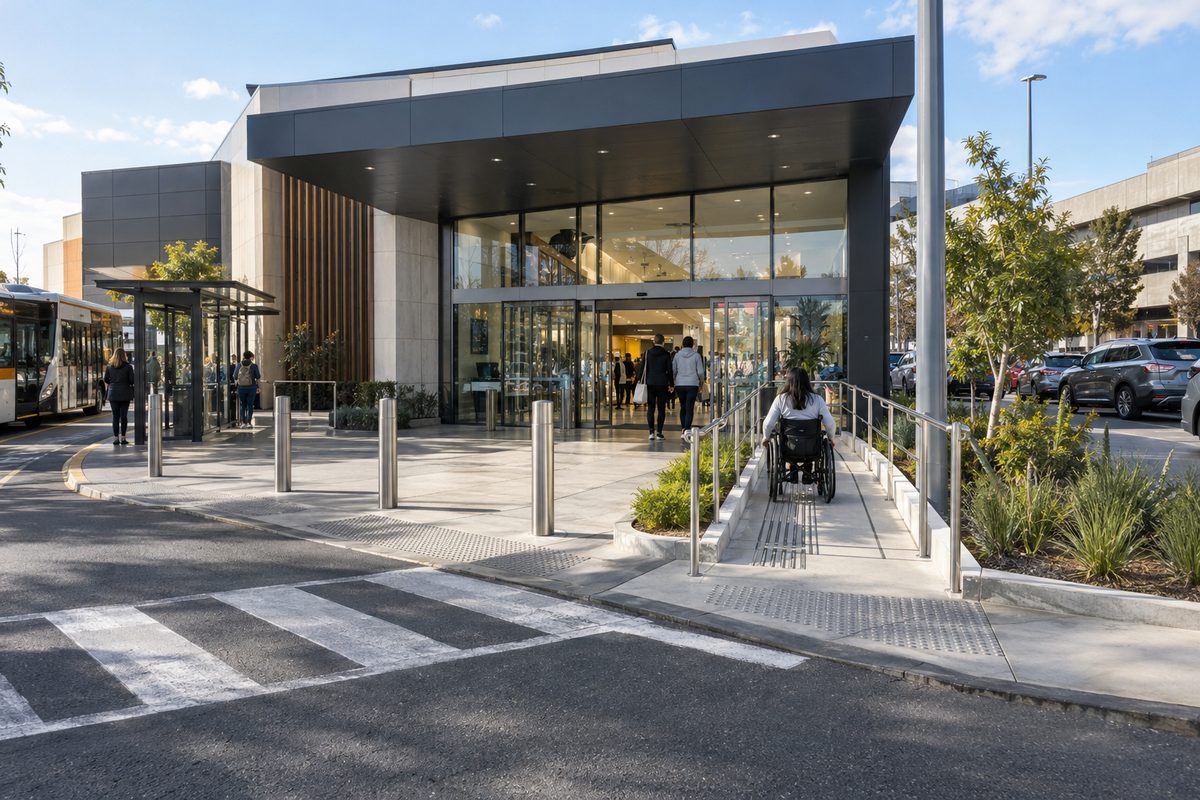
The easiest way to reach Highpoint is to match your route to your entrance: take a bus or taxi if you want to be dropped near a door, and park in the lot closest to the part of the centre you actually need. Most visitors pick a way to travel first and find the entrance later. That order causes the long walks, the wrong-level surprises and the circling around full car decks. Flip it and the trip gets easier.
This guide covers the arrival itself. It skips the shops and focuses on how you get from your front door to the inside of the centre, with extra detail for people who use wheels, walkers, prams or an assistance dog.
Why does your entrance matter more than your route?
Highpoint is a very large centre. The door you pick decides how far you walk, whether you meet stairs, and how close you are to a lift. A good route that ends at the wrong door still leaves you with a ten-minute trek through crowds.
One of my clients, a woman who uses a walking frame, drove to Highpoint every month and always parked at the first free space she saw. She finished each trip exhausted. When we mapped the centre together, she found a car park entrance two minutes from the lift she needed. Her shopping time doubled and her pain dropped. Nothing about her health changed. Only her entrance did.
So before you leave home, answer one question: where inside the centre do I need to be first? Then work backwards.
How does public transport get you to Highpoint?
A bus is the most direct public option for most people. Several bus services stop at or close to the centre, and the stops sit on the road edge near the main building. Train users usually travel to a nearby station and finish the trip by bus. Routes and timetables change, so do not trust an old memory of which service goes where.
Use an official journey planner. Type in your starting address, set Highpoint as the destination and choose your arrival time, not your leaving time. The planner then shows the services that actually get you there when you need to be there. It also lists the walking distance from the stop, which matters more than most people think.
In my experience, the most useful setting on any journey planner is the accessibility filter. It hides routes with stairs and flags low-floor vehicles. Turn it on even if you do not think you need it. A route that avoids stairs also helps anyone carrying shopping or minding children.
What should you check before boarding a bus?
- That the service you want runs on the day, since weekend and public holiday timetables often differ.
- That the stop you are heading for has a shelter and a flat approach.
- How far the walk from the stop is to your chosen door.
When I tried this with a group of older visitors, the plan that looked quickest on paper lost to a slightly longer bus ride that dropped them right at the doors. They preferred it every time.
What is the best way to use a taxi or rideshare?
If you want the shortest walk possible, go by taxi. A taxi stand sits near the centre and lets you step out close to the entrance. This suits people with limited stamina, people carrying heavy loads and anyone arriving in bad weather.
Tell the driver which entrance you want, not just the centre name. Saying "Highpoint" gets you to the nearest kerb. Naming a door gets you to the right one. For the trip home, plan to wait at the taxi stand rather than calling from a spot inside. Drivers can only reach the marked areas, and that is where you will be found fastest.
Wheelchair accessible taxis exist, but they are in smaller supply. Book ahead if you need one, and do not expect one to appear within two minutes at peak times.
How do you choose a parking lot that works for you?
Think of the parking lot as part of the building, not a separate problem. Highpoint has several parking areas spread around the centre, and they feed different entrances. Pick the one next to your first destination, not the one nearest the road.
Three habits save the most time:
- Arrive early on weekends. Spaces near the doors fill first.
- Photograph your bay number and level when you park.
- Choose the side of the building that matches your exit plan, so you walk back the way you came.
A friend of mine learned this the hard way. She parked on the far side after a long morning of shopping, then carried bags the length of the centre because she forgot where her car was. A single phone photo would have fixed it.
What about accessible parking bays?
Accessible bays are wider so a ramp or a lift can deploy beside the car. They sit close to lifts and entrances. You need a valid permit displayed to use them. Do not park in the marked shared zone beside a bay, even briefly. That strip is the space someone else needs to get out of their vehicle.
If every accessible bay is taken, ask centre staff or security for help rather than circling. They often know which area has a free bay.
Which entrances are step-free?
Highpoint has step-free routes, but not every door is equal. Main entrances at ground level use automatic doors and flat thresholds. Upper-level doors link to car decks and rely on lifts. Escalators are common but they are no help if you use a wheelchair or a pram.
Look for lift signs as soon as you walk in. Lifts are usually grouped near the main entrances and food areas. If you are unsure, go to an information point and ask for the nearest step-free route to your destination. Staff answer this question daily and give clear directions.
Tactile paving appears at key points to guide people with low vision. These raised ground markings run toward crossings, ramps and door approaches. If you use a cane, follow them. If you do not, keep them clear. Standing on them, or parking a trolley across them, blocks a route that others depend on.
How do wheelchairs and mobility scooters fare at Highpoint?
Both manage well in the wide main concourses. The harder parts are crowded shop entrances and the busiest weekend hours. A mobility scooter needs more turning room than a wheelchair, so plan for slow, wide turns near corners.
I know this because I helped a client who used a mobility scooter on her first trip. She went at noon on a Saturday. The aisles were so busy she gave up after an hour. The next trip, she arrived at opening time on a weekday. The same route felt like a different centre. She did her whole list in forty minutes.
Charge your scooter fully before you leave. A flat battery inside a large centre is a long way from a power point. Also check whether you can bring a scooter on your chosen bus. Rules about size and weight vary, and a quick check beforehand avoids being turned away at the kerb.
What if you are travelling with a pram or a baby?
Baby transport is simple here if you plan the lifts. Most prams fit on low-floor buses, and wide car bays make it easier to unload a pram from the boot. Avoid escalators with a pram. Lifts are safer and often quicker than waiting for a clear escalator.
Prams can block a bus aisle at busy times. Fold a light stroller if you can, or stay near the priority area. Offer your spot to anyone who needs the space more. Drivers generally wait for you to settle, so do not rush.
Parent rooms are available inside the centre. Know where the nearest one is before you need it. That saves a stressful hunt with a hungry baby.
How should you travel with an assistance dog?
An assistance dog is allowed on public transport and inside the centre. The dog should wear its harness or jacket, and you should carry your handler ID card in case anyone asks. Staff are trained to accept access rights, though a new employee may still ask for proof.
Give the dog a chance to relieve itself before you board. Long waits at stops are hard on a working dog. When you enter the centre, stay clear of the busiest door during peak times, because crowded entrances stress dogs and handlers alike.
In my experience, handlers do best when they arrive during quiet hours and scout the lift and toilet locations on the first visit. After that, repeat trips run on autopilot.
Where are the accessible toilets, and how do you find them?
An accessible toilet is a wider cubicle with grab rails, a larger turning space and a lock that is simple to operate. Highpoint places them in several spots across the centre, usually near food areas and the main concourses. Signs point the way, and information points can confirm the closest one.
Use them only if you need them. If you do not, choose a standard cubicle and leave the larger space for someone who cannot manage elsewhere. A person who needs a carer, a hoist or room for a wheelchair has no alternative.
Find the nearest accessible toilet before you start shopping. Mark it as your base. Then every stop you make has a clear route back to it.
What if you cycle to Highpoint?
Cycling suits people who live close enough for a short ride. A bicycle parking rack is available near the centre, and using one is far better than locking to a railing or a sign. Racks keep walkways clear and give your frame a solid anchor.
Bring a strong lock and take your lights and bags with you. Choose a rack within sight of a door or a security camera. Leave the spot with a quick check that your bike will not block a ramp or a tactile paving strip.
If you ride an electric bike, think about the return trip. A fully loaded bike is heavier and harder to balance, so pack light on the way home.
Why do most arrival plans fail?
Most plans fail for one reason: they treat travel as one step. In fact, there are three separate parts, though people only plan one. You choose how to get there, where to stop and which door to use. If you skip one, the trip drifts.
The mistake most articles make is to list every transport option and leave the choice to you. A better question is: what is hardest for me? If it is distance, take a taxi to a close door. If it is cost, use the bus. If it is carrying things, park near a lift. Let your hardest problem choose your route.
What should you do before your next trip?
Take these steps this week:
- Decide the first place you need to reach inside Highpoint, then pick the entrance nearest to it.
- Open a journey planner, turn on the step-free filter and test your route for the day and time you plan to go.
- Choose your parking lot, taxi stand or bicycle parking rack to match that entrance.
- Note the nearest lift and accessible toilet, and charge any mobility scooter or device the night before.
- Arrive outside peak hours if you can, and photograph your bay when you park.
Do these five things and the arrival stops being the hard part of your day. Start with the entrance, and the rest of the journey follows.